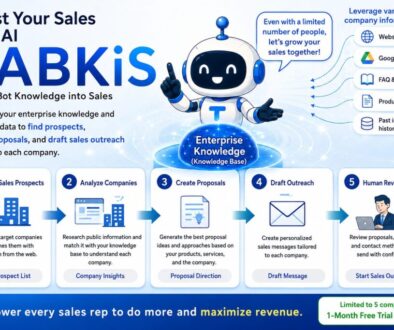
There are situations where you may need to provide AI with files containing personal data or highly confidential information. Will such data be used for training or shared in responses to other users?
Rest assured. TuneAIBot uses a customized ChatGPT model dedicated to each client, accessed securely via API. Data such as files and text submitted through the OpenAI API are not used for training or improving the model. Security Overview PDF for API Usage
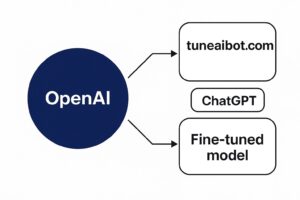
According to official terms of use and security policies:
-
Data submitted via API
Data sent through the OpenAI API is not used for model training or fine-tuning.
Unlike inputs provided through the ChatGPT app (browser or mobile), data transmitted via API is explicitly excluded from training use.
-
Purpose of use
Data sent via API is used only for processing requests (generating responses) and for temporary monitoring to prevent abuse and ensure service stability.
-
Retention period
OpenAI may retain data temporarily for security and auditing purposes, but it is not incorporated into training datasets.
Therefore, even if you need to send files or text containing personal or sensitive information via API for business purposes, they will not be used for training without your consent.
📌 OpenAI API Data Usage Policy Summary (For Users)
1. Use for Training
-
Data sent via API is not used to retrain models.
-
This is clearly distinguished from ChatGPT app usage (such as personal or free plans), where data handling policies may differ. API data is not used for training purposes.
2. Data Storage and Retention
-
API requests and responses may be temporarily stored for abuse detection and security auditing.
-
Data is deleted after a certain period and is not stored long-term.
-
Enterprise plans may offer a “no data retention” option.
3. Scope of Use
-
Data is limited to the following purposes:
-
Generating responses
-
Ensuring service stability (debugging and performance monitoring)
-
Detecting abuse (spam or attacks)
-
In other words, data is not used for training, marketing, or improving AI models without permission.
4. User Responsibility
-
When sending personal or sensitive data, users must ensure compliance with applicable laws (such as GDPR or data protection regulations) and internal policies.
-
If the data includes third-party personal information, proper anonymization or consent should be obtained in advance.
5. Contract-Based Differences
✅ Summary
-
Data sent via API is not used for training
-
Data may be temporarily retained but is deleted
-
Users are responsible for handling personal data appropriately
| Name |
Description |
| API Data Usage Policies — OpenAI (Platform Docs) |
Explains how input/output data is handled via the API, including retention and abuse monitoring. (OpenAI Platform) |
| Consumer privacy at OpenAI |
Describes how user data is handled for both general users and API users, including confirmation that API data is not used for model improvement by default. (OpenAI) |
| Enterprise privacy — OpenAI |
Details data handling practices for enterprise and business use cases. (OpenAI) |
| Security & Privacy — OpenAI |
Overview of OpenAI’s security framework, privacy commitments, and compliance standards. (OpenAI) |
| Usage policies — OpenAI |
Comprehensive policies covering acceptable use, restrictions, and responsibilities. (OpenAI) |
| How your data is used to improve model performance |
Explains under what conditions data may be used for model improvement. (OpenAI) |